
9 Smart Ways to Use Your Tax Refund (Ranked by Financial Impact)
The average tax refund is over $3,000. Here's a ranked list of the smartest ways to deploy that money to maximize your financial progress this year.
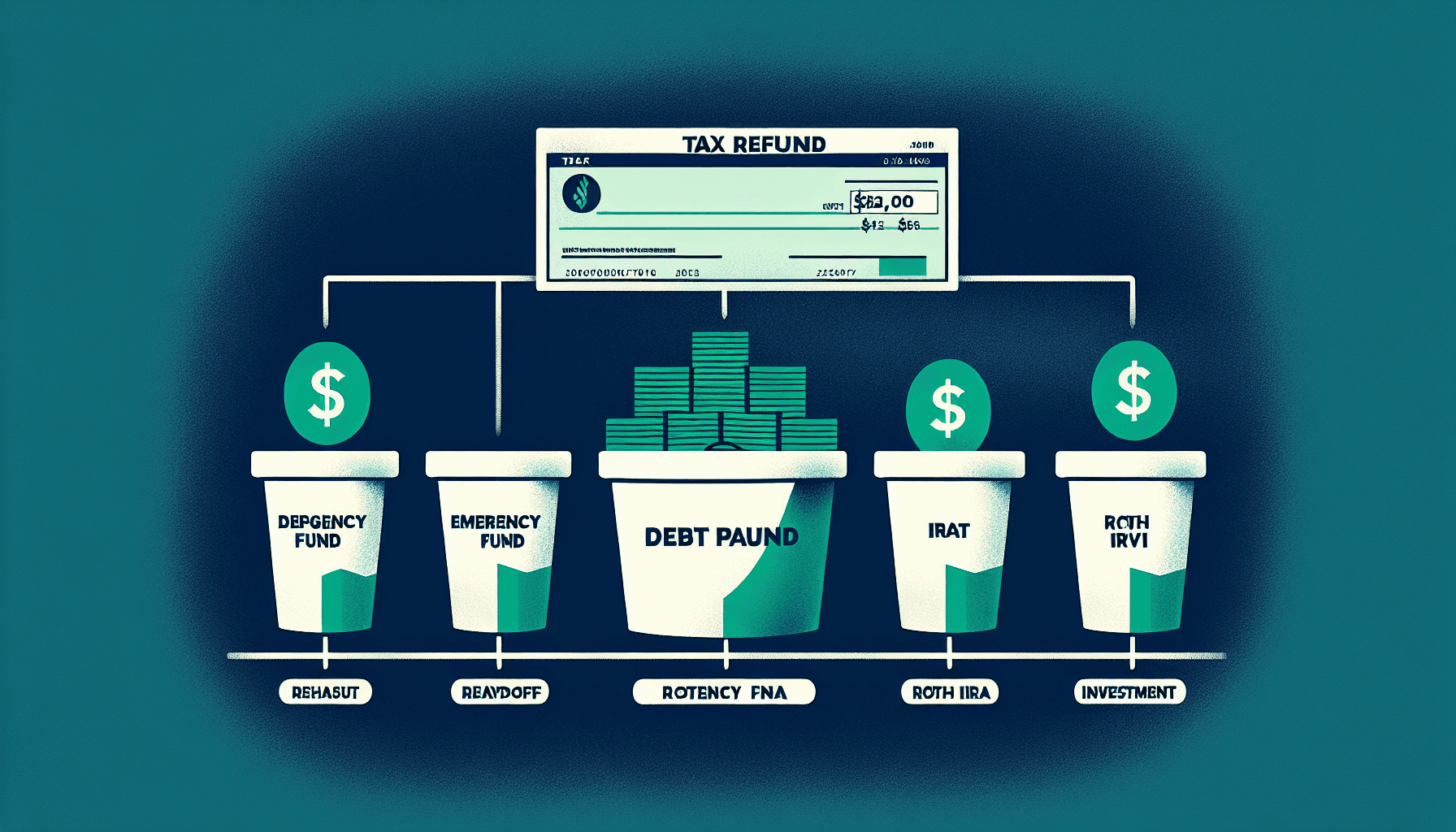
9 Smart Ways to Use Your Tax Refund (Ranked by Financial Impact)
The average federal tax refund in 2024 was $3,167 — a meaningful sum that most people receive once a year. What you do with it in the first 30 days is almost always what determines whether it makes a lasting difference.
Here are the nine best uses, ranked by the financial impact they're likely to have.
1. Wipe Out High-Interest Credit Card Debt
If you're carrying a balance at 20–29% APR, paying it off with your refund is the highest guaranteed return available to you. Eliminating a $3,000 balance at 24% APR saves you roughly $720 in interest over the next year — risk-free. No investment reliably returns 24%.
Use our Credit Card Payoff Calculator to see exactly how much your current debt is costing you.
2. Build or Top Up Your Emergency Fund
Before investing a dollar, you need 3–6 months of essential expenses in a liquid, accessible account. If you don't have this buffer, a single job loss or medical bill will send you right back into debt. A $3,000 refund can fully fund a starter emergency fund for many households.
3. Contribute to a Roth IRA
The 2026 IRA contribution limit is $7,500, or $8,600 if you are 50 or older. A tax refund is a painless way to make a lump-sum Roth IRA contribution if you are eligible. Put $3,000 in today, let it grow tax-free for 30 years at 7%, and it becomes approximately $22,800 — completely tax-free.
4. Pay Down Other High-Interest Debt
After credit cards, target personal loans, medical debt, or any loan above 8% interest. The math is similar: every dollar you eliminate saves you that interest rate in guaranteed future returns.
5. Fund a Health Savings Account (HSA)
If you have a high-deductible health plan, an HSA is the only triple-tax-advantaged account available: contributions are pre-tax, growth is tax-free, and qualified withdrawals are tax-free. The 2026 limit is $4,400 for self-only coverage and $8,750 for family coverage.
6. Invest in a Taxable Brokerage Account
Once your high-interest debt is gone and retirement accounts are funded, a taxable brokerage account gives you flexibility. A simple three-fund portfolio of index funds (US stocks, international stocks, bonds) is a proven wealth-building approach with no contribution limits.
7. Pre-Pay Mortgage Principal
If you have a mortgage at 7% or higher, making an extra principal payment delivers a guaranteed 7% return. On a 30-year mortgage with a $300,000 balance, a single $3,000 extra payment can eliminate $8,000+ in total interest and shorten the loan by several months.
8. Invest in Career Development
This one is often overlooked but can have the highest ROI of all. A certification, course, or degree that earns you a $5,000 raise compounds for every year of your remaining career. Calculate that expected increase over 20 years, and a $500–2,000 investment often beats the stock market.
9. Build a Specific Savings Goal
If your debts are manageable and emergency fund is solid, use the refund to accelerate a goal: a house down payment, a car replacement fund, or a planned large purchase. Avoid financing things you can save for.
What Not to Do
- Don't spend it on lifestyle inflation. A vacation, new TV, or wardrobe upgrade feels good but returns nothing. If you want to reward yourself, allow 10% for something enjoyable and invest the rest.
- Don't just let it sit in a checking account. At 0.01% interest, it's effectively losing value to inflation.
- Consider adjusting your withholding. A large refund means you overpaid taxes all year — the IRS held your money interest-free. Adjusting your W-4 to get that money monthly lets you invest or pay debt throughout the year instead of waiting.
Key Takeaway
The optimal order: eliminate high-interest debt → fund emergency reserves → max retirement accounts → invest the rest. Even acting on just one of these will put your refund to work far better than the average American manages.
Disclaimer: This article is for educational purposes only and does not constitute financial advice.
Share this article
Further Reading
Ready to run the numbers for your situation?
Browse all free calculators →